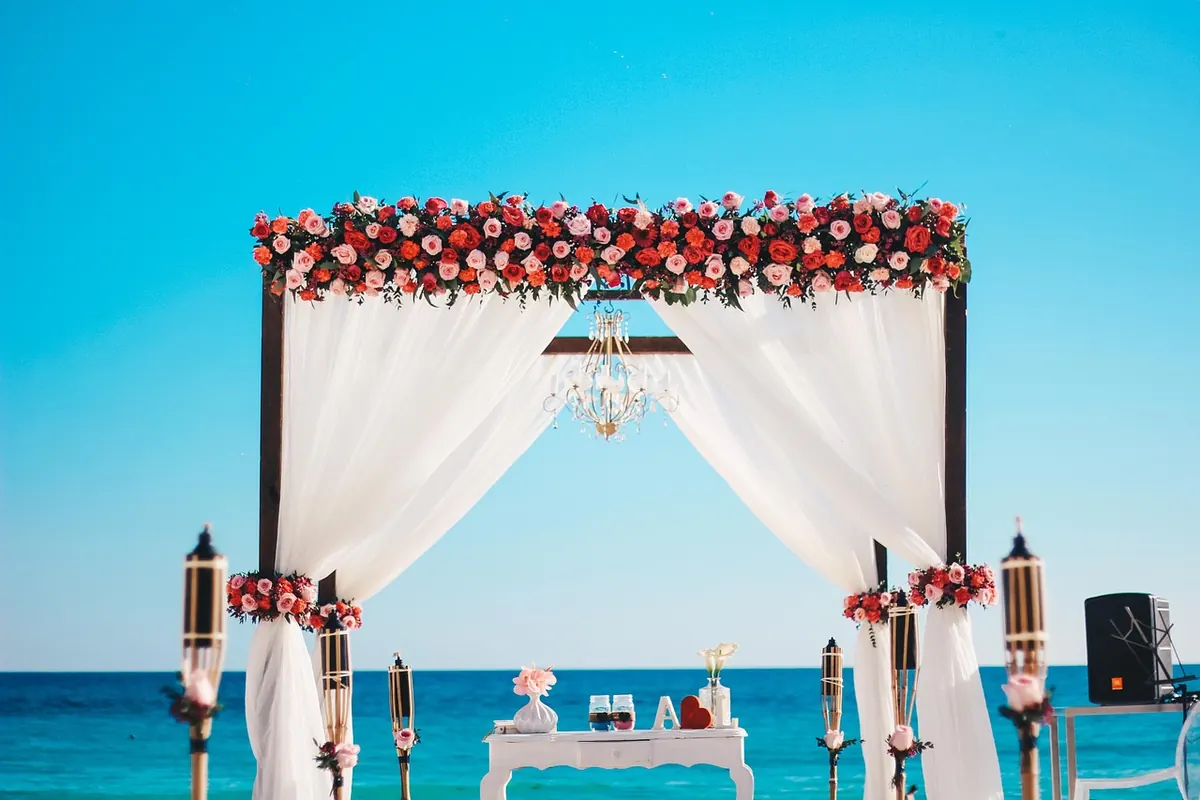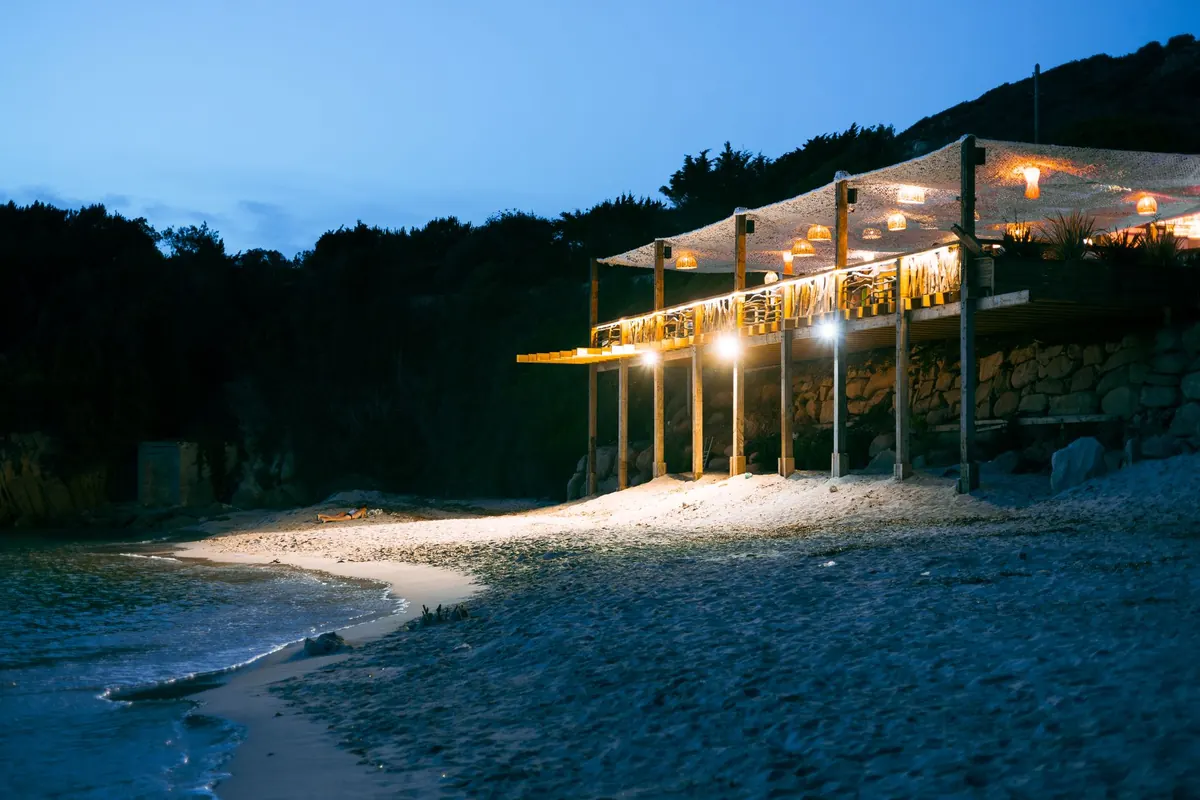
The light reaches the terrace before the first plate does. At six the water is still bright and every table looks ordinary; forty minutes later the same room has a glow in it that no filter improves on. Terrazza Del Porto changes character three or four times in an evening, and each version photographs differently. What follows is a walk through the spots worth standing in, the hours worth waiting for, and the small habits that separate a snapshot of dinner from a picture that makes someone ask where you were.
Start Outside, Before You Sit Down
The best wide shot of the terrace is almost never taken from a table. It's taken from the harbour path, thirty or forty steps back, while the room is still half empty and the staff are lighting the candles.
Arrive fifteen minutes before your booking and walk past the entrance rather than straight to it. Turn around. From the outside you get three things a table can't give you: the whole shape of the terrace, the sea sitting behind it, and the line of warm interior light against a cooler sky. Frame it with something in the foreground — a bollard, a coiled rope, the rail of the harbour walk — and the picture stops looking like a postcard and starts looking like a place.
A 35mm or 50mm equivalent is plenty. Shoot at chest height rather than eye height, keep the vertical lines of the building reasonably straight, and take one frame slightly wider than you think you need. You can always crop a little; you can't add the sky back in. If the staff are still setting up, that's a feature, not a problem. A few empty tables suggest the calm before the service rather than the middle of it.
The Edge of the Terrace: Let the Sea Do the Work
Once you're seated, the obvious spot is the edge — the row of tables closest to the water, or the low wall if there's room to stand beside it. This is where the sea view earns its keep.
Put the horizon high or low, never across the middle, and never through anyone's head. If you're photographing a person against the water, turn them so the sea is to one side and the terrace is behind, then expose for their face and let the highlights on the water go bright. Metering for the sea instead gives you a beautifully detailed Mediterranean and a friend in silhouette.
A few practical moves:
- Shoot slightly downwards at the water to catch texture and colour; shoot level for a clean horizon.
- Wait for a boat, a gull, or a paddleboarder. A single small moving object gives scale to an expanse of blue.
- Use the low wall, a glass, or a shoulder in the near corner as a foreground anchor — it adds depth without clutter.
- Brace your phone or camera on the wall for lower light. A stable frame at ISO 400 beats a shaky one at ISO 3200.
- Skip the flash. The sea goes flat and grey in a fraction of a second.
The Table Itself: Food Photos That Still Look Like Dinner
Food is the hardest thing on the terrace to photograph well, because the good light is behind it and the good angle is usually the one your dinner companion is sitting in.
Get low. Photograph the plate at roughly the height of the rim, or a little above, so you see the surface of the dish and the glass beside it. Overhead shots work beautifully early in the evening, when the table is still uncluttered; by the main course there's usually a bread basket, two phones and an elbow in the frame, and a top-down picture turns into a jigsaw.
Use the light you have. At sunset, sit with your back to the west and let warm side light rake across the plate — that's what gives texture to grilled fish, oil, and anything with a crust. At noon, move to the covered section or the shaded side of the terrace rather than shooting in direct sun. If a dish is served under a cloche or comes out flaming, ask before you shoot; nobody wants a phone in the way of a hot pan.
Two small rules that reliably improve results: take the picture in the first minute, before the sauce runs and the plate loses its shine, and include a hand — reaching for a glass, tearing bread, holding a fork. Hands tell the viewer someone was actually eating.
Midday and the Shade Line
Hard, high sun gets a bad reputation, and at Terrazza Del Porto it earns some of it. Faces go squinty, whites blow out, and shadows cut across the table like a ruler. But the sea is never better than it is at one in the afternoon, when the colour comes up turquoise and the water is clear enough to see the bottom near the shore.
So split the two. Shoot the sea at midday — wide, with a boat or a swimmer for scale — and shoot people and plates in the shade. Look for the line where the awning or the covered part of the terrace throws its shadow, and put your subject just inside it, a metre or so from the edge. That soft zone gives you even skin tones with a bright, lively background, which is exactly the balance midday rarely offers. Use the edge of the awning as a frame if you want something a bit more graphic than a straight-on view.
A Timeline from Golden Hour to Blue Hour
If you only have one evening, spend it like this. The timings are deliberately approximate — shift them to match the season and check sunset for your date beforehand.
- Ninety minutes before sunset. Walk the terrace and the harbour path without a camera in your hand. Find your three frames, then go back for them.
- Sixty to forty minutes before sunset. The warm, low, side light. This is your window for portraits at the edge and for plates with texture.
- Sunset itself. Turn around. The most photographed moment is often behind you, where the terrace is lit gold and the sky does something quieter.
- Fifteen to thirty minutes after sunset. Blue hour. The lamps come on, the sky holds colour, and the two balance. Steady yourself on the wall, raise the ISO, and take several frames — this light changes by the minute.
- After dark. Candlelight and glass. Get close, avoid the flash, and look for reflections in windows and in the water below the terrace.
The Small Frames Nobody Thinks to Take
The gallery isn't only views. Some of the strongest pictures from an evening at the water's edge are details: a glass catching the string lights, a folded napkin and a fork at an angle, the door to the kitchen swinging open, the harbour beyond the railing going dark. Photograph the sign as you leave. Photograph the empty chair opposite you while your companion is up and the light is still good.
These frames take ten seconds each and they're what holds a gallery together. A wide shot, a portrait, a plate, a detail — that's a story. Six versions of the same sunset is not.
Practical Notes Before You Go
Photograph your own table freely, and ask before you include other guests — most people say yes, and the ones who don't will appreciate being asked. Keep the flash off during service, stay out of the waiters' path, and don't stand on walls or railings for a better angle; the drop to the water is real. A small tripod or a clamp is easier to justify than a full-size one, and if the terrace is busy, a phone braced against a glass does most of the work.
One last thing worth planning: request a table at the edge when you book, but book it because you want to eat there. The photographs come as a side dish. Cameras get in the way of an evening when they become the reason for it, and the best picture from a night on the harbour is often the one taken between courses, with the light already doing the hard part.
Photo: Pix-Off / Pixabay